About the Author
Gabriel Monteluz is a software engineer who got his first dial-up PC at age 12 in 2002 and spent 21 years watching the intentional web turn into an attention casino. Living with ADHD friction and chronic work-avoidance loops, he tried dumbphones, grayscale filters, timers, and account deletions—failing repeatedly until he dismantled the illusions underneath the habit in 2023.
Everything Included Today for $9.99 USD
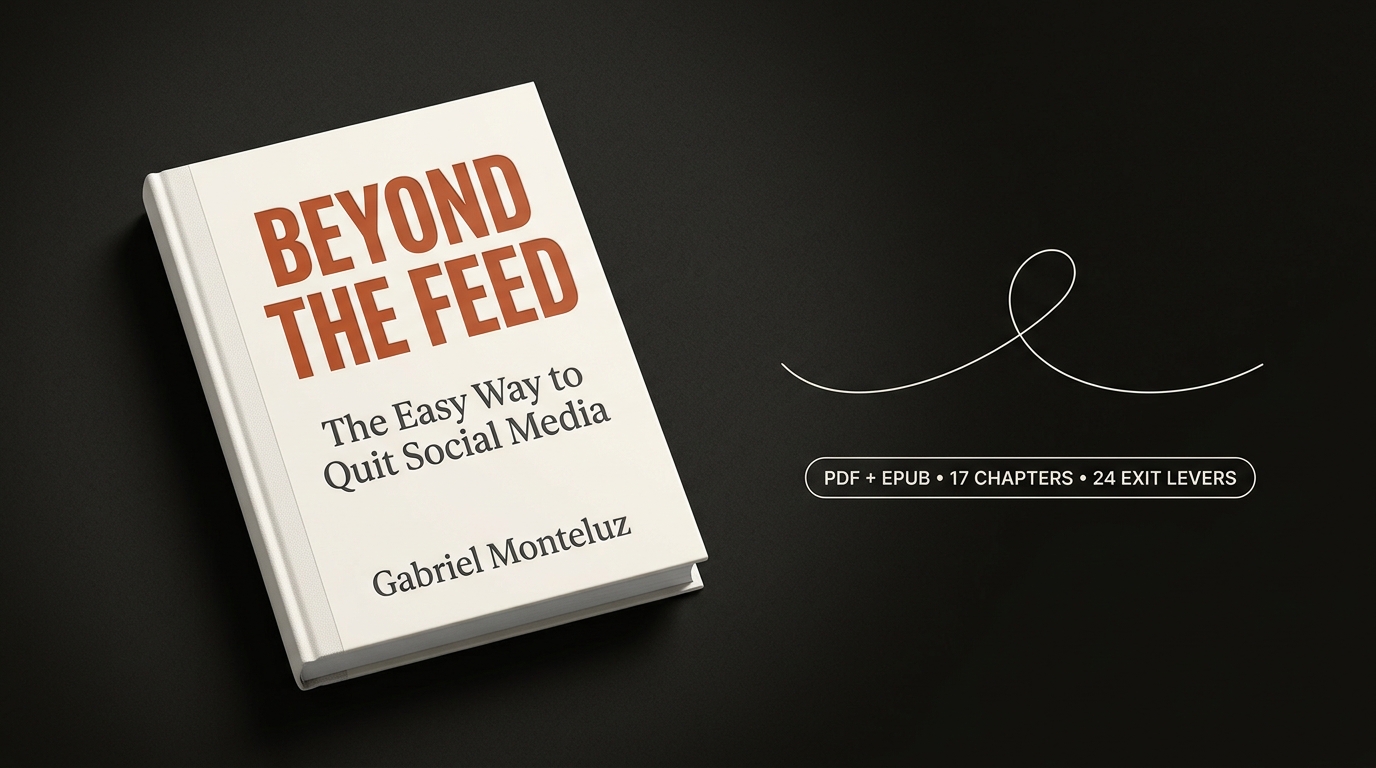
- Full 17-Chapter Book (PDF): Publication-grade typography for desktop, tablet, or print.
- Full 17-Chapter Book (EPUB): Formatted for Kindle, Apple Books, Kobo, and any e-reader.
- Included Appendix: All 24 Algorithmic Levers & Practical Countermeasures field manual.
- DRM-Free & Instant Download: Zero recurring subscriptions, zero account lock-in.
Frequently Asked Questions
Why do I bypass my own app blockers within 30 seconds?
When a phone sits right next to your hand, motor habits fire faster than prefrontal braking (Russell Barkley's point of performance). Chapter 13 shows how physical distance and low-friction desk anchors solve this without willpower.
When I delete TikTok or Instagram, why do I end up scrolling YouTube or Reddit instead?
That is Salience Transfer (Chapter 12): as long as your brain expects instant novelty relief from the screen, it jumps to whichever unblocked app remains.
What replaces the stimulation without leaving me bored and restless?
Chapters 13–15 pair physical scaffolding (keeping a scratchpad beside your keyboard, tactile anchors) with dismantling the illusion that feeds relieve boredom.
Is this a subscription?
No. It is a single one-time payment of $9.99 USD for both DRM-free PDF and EPUB files.
What is the return / refund policy?
Because this is an instant digital download with full DRM-free PDF and EPUB files delivered immediately, all digital sales are final (no returns or refunds). Not sure yet? Try the $0 Free Sample (Manifesto + Introduction PDF) first before buying.